
Healthcare & Life Sciences

According to research on NHS interoperability, England experiences an estimated 1.8 million undetected medication errors at patient transitions every year, causing harm across more than 31,000 patient episodes annually. Moreover, 8 million outpatient appointments went unused last year, representing £1.2 billion in wasted resources annually.

Patients should not have to repeat themselves. Neither should your staff.

The NHS and private healthcare providers alike are grappling with the same underlying issue. Vast amounts of clinical and administrative data, held across systems that were never designed to share it. The burden falls on staff who end up filling the gaps manually, and on patients who experience the consequences of a system that does not quite join up.

Healthcare and Life Sciences-1

What this looks like when it works

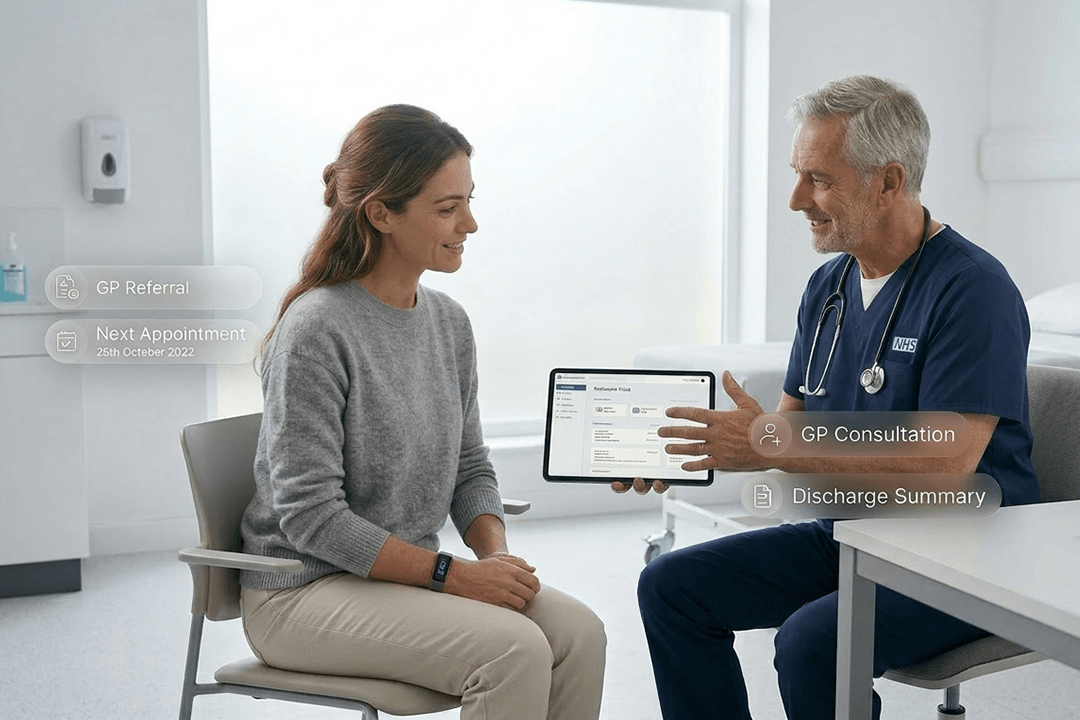
A referral is made and the receiving clinician has everything they need before the appointment. A patient is discharged and the follow-up is scheduled, the GP is notified, and the billing is coded without anyone re-entering a single detail. A compliance return that used to take a week to compile is produced in an afternoon.
Healthcare and Life Sciences-2

Some common problems and how we solve them

Clinical information spread across too many systems
Patient records, diagnostics, prescribing and appointment data across disconnected platforms force clinical staff to piece together information manually under time pressure, increasing administrative burden and clinical risk. We integrate healthcare systems so information flows securely between platforms, giving staff faster access to accurate data and supporting safer, more coordinated care.
Referral and discharge processes that rely on people chasing people
When referral and discharge information does not move automatically between systems, coordination falls back on emails, calls and manual follow-ups - delaying care and creating records that are difficult to audit. We connect the systems involved so information transfers in real time, improving visibility and maintaining a more reliable patient pathway.
Clinical activity that does not reach the billing system
When delivered services are not consistently reflected in billing systems, revenue leakage and manual reconciliation become unavoidable. We integrate clinical and finance systems so activity data flows directly into billing processes, improving accuracy and ensuring revenue is captured reliably.
Research data that is hard to pull together consistently
Clinical trials and population health initiatives often depend on data from systems that were never designed to work together, creating inconsistencies that undermine analysis and reporting. We connect research, clinical and operational data sources so information is aggregated automatically, improving consistency and supporting reliable analysis at scale.

Why Turbosoft

Healthcare integration is held to a higher standard, and rightly so. We design for that: governance, security and compliance built in, not bolted on.